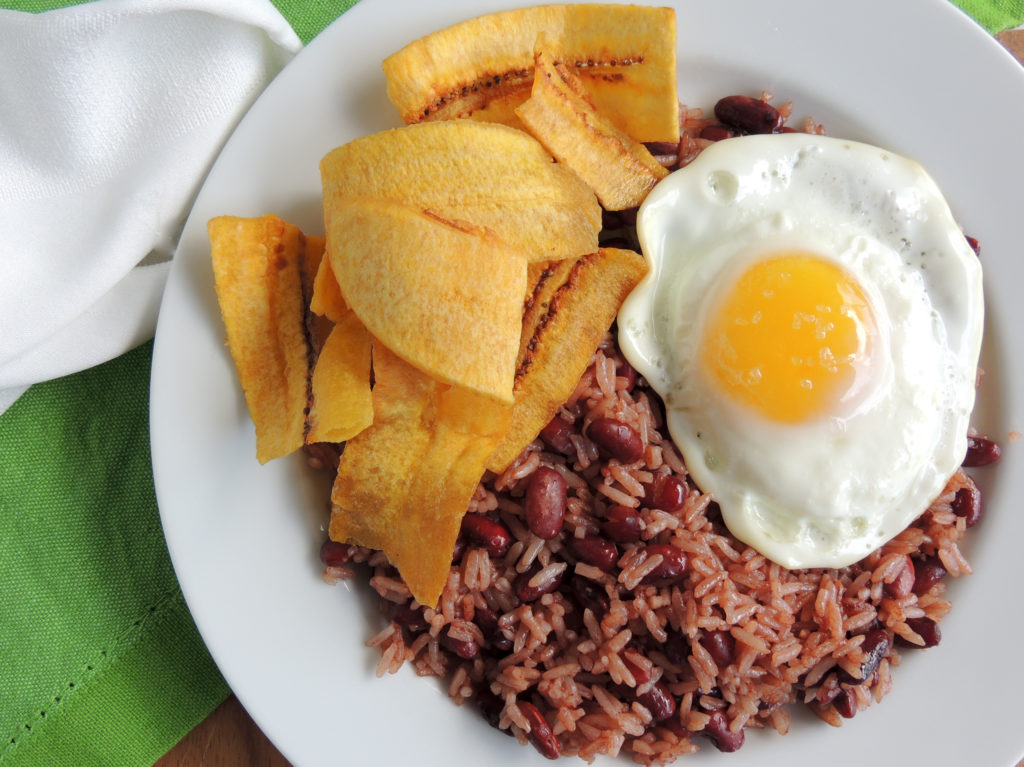
The How of Hospitality, pt. 1

When I was growing up, hospitality wasn’t a big topic of conversation. It was simply practiced. It was a natural, normal way of life—so natural, I don’t think it needed to be talked about. We didn’t need classes or reminders that it mattered. It just happened. People knew their neighbors. All of them. People were in and out of each other’s homes. People looked out for one another.

I remember sitting in our living room one day when Mr. Greaney sprinted past our window. Sprinted. And in the wrong direction. He ran every day, always at a steady training pace, and always south to north past our house. This time was different. We immediately knew something was wrong. My dad ran outside and saw smoke coming from the Adelsons’ house. They weren’t home. This was a fire. Dad took off after Mr. Greaney. The neighbors had the fire out before the fire trucks even arrived. The house needed repairs, but it was saved—and so were most of their belongings.

That may sound like an extreme example of hospitality, but imagine seeing suspicious smoke in your neighborhood today. You’d probably call 911. But would you know if your neighbor was home? Would you recognize that something was off? Do you know your neighbors’ routines? Are you known? Do you know the people around you?

Hospitality showed up in everyday ways, too—carpools to swim practice, neighbors watching each other’s homes while someone was on vacation, meals brought to the sick. And then there was Zeb. When we were younger, our neighbor Zeb showed up at our back door almost every night for dinner. From his house on the hill, he could see straight into our kitchen. He loved my mother’s cooking, and since we ate about thirty minutes after his family did, he’d finish dinner at home, spot us sitting down, run down the hill, knock on our back door, and ask to join us. It took his mom a while to figure out where he was going every evening. I’ll never forget how comfortable he felt just showing up.

Neighbors believed in being neighborly. And from all those years in and out of people’s homes, I can tell you there were common threads. Homes were cared for. I don’t remember sinks full of dishes, piles of laundry, or clutter everywhere. Food wasn’t fancy, but it was always available, and people were welcome for any meal, no matter how simple. Every home had rules—and they were almost identical. Shoes off. Clean up after yourself. No running inside. No roughhousing in the living room. Inside voices. Be respectful. There was a shared standard for how to keep a home and how to behave in it.

Those days—of knowing your neighbors, living with open doors, and learning by watching capable adults—feel largely gone. And with them went the quiet education that came from example. I talk with young brides all the time about keeping a clean home. The answer isn’t complicated: clean it, and maintain it. I hear, “That’s a lot of work.” Meanwhile, dishes and laundry pile up, “adulting is hard” becomes the refrain, and somehow the expectation remains to host a Pinterest-worthy dinner party.

Here’s the hard truth: hospitality is work. Hard, intentional, often unglamorous work. If you want people to feel comfortable in your home, you can’t live in chaos. If you want to feed people, you need to manage your budget, shop wisely, and learn to make coffee at home instead of buying it out. We’ve turned frantic, last-minute cleaning into a joke—Reels of angry moms power-cleaning while kids endure the chaos so everything “looks right” when guests arrive.

That isn’t hospitality.

Hospitality begins at home, on ordinary days. It begins with your own family. If you can’t be hospitable to them first—and invite others in only as an overflow—you’ve missed the point.

So how do we do it right? We start with how we care for our families and maintain our homes. And next, we get practical…
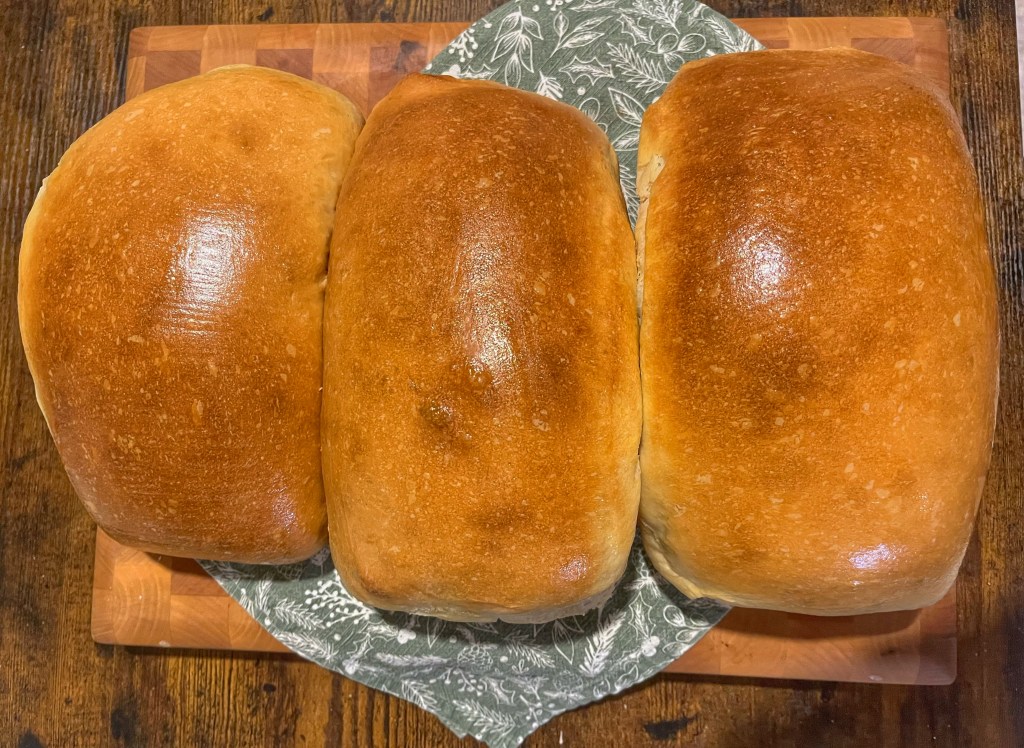

Sandwich Bread

Ingredients

2/3 c melted butter

2/3 c sugar

1 egg

1 Tb salt

Mix well

Add in alternating 

4 c tap hot water (mine gets hot!)

5c flour

1/2 cup dried milk 

Once fully mixed sprinkle 1 Tbs. Yeast in. Mix for a few minutes. Let sit and get a little bubbly. 

Now add in another 5 cups flour. Or, until you get a good dough. This will depend on your kind of flour. You don’t want it dry, but also not to sticky.

Knead for 10 minutes until smooth or in a mixer for at least 6 minutes 

Let rise for 1 hour

Divide in 3, form loaves and put in buttered tins. Let rise until an inch above the rim.

Bake at 350 for 30-35 minutes.

Let cool for 10 minutes before cutting. Spread butter in top for extra yumminess! 

*you can alternate milk for water, honey for sugar, oil for butter.

You can use all purpose flour for the whole thing or, do half whole wheat/half all purpose, or half bread flour/half all purpose.

The Why…of hospitality

As with anything in life, if you don’t have a clear understanding or belief of why you are doing something, it probably won’t get done. Or, at least, it won’t get done consistently or well.

Being hospitable is attractive. In the world of Pinterest and Instagram, we see constant pictures and reels of the perfect dinner party, the beautifully curated home, and the smiles of people having the time of their lives. If having a Pinterest-worthy photo is why you want to be hospitable, you will probably pull off a really cool party—something that’s totally on trend, with the right food and décor, and a perfectly curated guest list. However, I doubt that it will be a time of true connection. It’s hard to connect when you are filming the whole event or when you are hyper-focused on the aesthetic. Not that planning and aesthetics don’t matter, but they can’t be your “why.”

We also live in a world that is craving genuine human connection more than ever. But if your focus is on yourself being fulfilled by the people in your home, you will also fall short of true connection and hospitality. Again, feeling connected to people is important, but you can’t have people into your home with the expectation that they fulfill you.

So, why do we show hospitality? First of all, it is a biblical command and absolutely core to our Christian faith and culture. I think sometimes when we see something is a “command,” it can feel like drudgery—something you have to do—instead of something that is a joy. But please, please remember: God’s commands are for our good, for the good of the world, and they reveal a part of His character. His yoke is easy, and His burden is light.

We see in Romans 12:13 that hospitality is intentional—we are to seek it. It is an expression of the Gospel in that, as we welcome others, it shows how God welcomed us. We see in Luke 14 that hospitality is sacrificial; it is not self-serving. We also see this in the ultimate example: Christ Himself, who came not to be served but to serve, and to give His life as a ransom for many. Hospitality is also both ordinary and intimate. It is shown in our homes and with our families, often in the simplest of ways—by breaking bread together.

This foundation really puts things in perspective and helps keep the focus on the right things as we begin welcoming people into our lives and homes. A spill all over my intentionally laid table? No big deal—we will manage and move on if you are welcomed into my home with a heart intent on showing you the love of Christ. However, I am much more likely to show irritation as I clean up that same spill if I am thinking, “All that work, and now my picture is ruined.” It seems like a silly example, but start to take stock of what irritates you in your day and ask yourself why it is that you are irritated. Did my kids’ mess interrupt my plans or derail what I was trying to accomplish? Or is it a teaching opportunity?

I will never forget how my mom talked about these things. She cared about keeping a nice home and loved having family heirlooms, but she always said, “I want to leave a spiritual legacy, not one of things.” I love looking over and seeing my mom’s candy dish on the end table in the living room. But I see so much more than a dish—I see a part of her, and I remember the things she tried to teach.

One day, we were visiting my sister when my oldest was just four years old. He was, at the time, an only child and thrilled to be running around with cousins. He ran past an end table in her house and broke one of my mom’s dishes that my sister had. He froze. He started to cry. Before I could even move toward him, my sister swept him up in her arms, wiped his tears, and said, “People matter more than things. I love you so much more than that dish. I know it was an accident.” Then she told him how my mom wanted to leave a spiritual legacy.

What an incredible moment of hospitality—one that impacted each one of us. My sister didn’t forget her “why.”

Hospitality

The topic of hospitality has been popping up in different and unexpected ways all around me lately. I have always loved hospitality, whether it’s hosting a fun dinner party, helping run an event, bringing a plant or loaf of bread to a neighbor, or just popping a bowl of popcorn for the boys as we cuddle in for a movie night. I not only enjoy it, I feel a conviction about it. Scripture commands hospitality. It is core. Fundamental to the way the Body of Christ loves one another.

To be honest, I didn’t really think that there was necessarily more I needed to learn about hospitality. Perhaps a better way to say it is that I wasn’t looking for new ways to be hospitable or feeling the need to dig deeper. Then little conversations, or even quiet words, began popping up around me.

My mother-in-law was visiting, and we were talking about the importance of sharing food in our homes—how it’s important to always have enough and always have something to offer, even to the unexpected or last-minute guest. She even told me that she began to think differently about her budget when it came to food. That, while being wise and even as frugal as possible, instead of food being the budget line item that took the biggest hit, she would rather sacrifice in another area of life and spend well on food. Notice I said well, not necessarily a lot or unnecessarily, but rather that she wasn’t afraid to pick something off the shelf if she thought it would be a blessing to others.

Shortly after this conversation, I found myself in another talk with a young wife asking how to run her home. I’ve had quite a few of these conversations, and while I truly love them, I kept thinking that I was missing something in how I was explaining hospitality. Or perhaps they were missing what I was saying because they had never been taught hospitality clearly.

The sweetest hospitality is so natural—such an overflow of the heart—that it seems completely organic and without thought. The truth is far from that. Hospitality takes a lot of intentionality, planning, organization, a desire to engage in self-sacrifice, and a commitment to never forget your “why.” True, once it becomes an overflow of your heart, it does happen more and more organically and without stress at all. But as with all things, practice makes perfect.

More on the heart of it all—the *why*—later. Also, as a side note, my son’s headmaster used to say, “Practice makes permanent.” Isn’t that the truth? All too often we do not plan, organize, or practice self-denial and then want to show up as the perfect host. That’s not what you spent your time practicing!

Then two things happened back to back. I was at a friend’s home, teaching her how to make bread. She was sharing her heart with me about how she wanted to transition to an “ingredient home,” wanting to host well, but most importantly wanting to focus on the hospitality of the home—meaning her family members first.

That same day, I saw a recommendation for the book Unreasonable Hospitality. I’m almost done with it, and I would highly recommend it! It’s more of a business book, but it’s applicable to all areas of life.

Ok, that’s the background. What’s the point? I want to be more intentionally hospitable, and I want to write about it here. I do so much better getting my thoughts out this way. I want to organize my thoughts in a way that can hopefully be a blessing to others in the future. Most importantly, I want to notice that the Lord has brought these things to mind, and I want to steward them well.

Step 1: The Why…

Snow

There are some things so deeply engrained in me, things woven into my being, that I don’t really have words to describe.

Snow is one of those things. We’ve just had a massive snowfall here in Kentucky. The largest snowfall in 30 years. Suddenly, I don’t feel like I’m in Kentucky. I’m back in Montana. There is a fresh blanket of white over everything, the light is clean. The plumage of the winter birds stand out against the snow. Hovering above the scent of the snow is the redolence of the chimneys. Everything feel cozy and restful inside, while outside is a new playground.

Snow makes me feel like a kid again. With that comes a deep longing.

Just the important stuff

One of my absolute least favorite things is to get on Pinterest and look up a recipe or something I am interested in and then have to filter through a million pop ups and long descriptions of how the author feels about the recipe, a background story, and every caviat before actually getting to the recipe. Yes, there is a “jump to recipe” button, but it rarely works.

So, here is my promise to you. The Recipe comes first with no pop ups. That’s it. You will immediately see a recipe and then you will have all the chat after.

Enjoy!

Cooking with Generations

“No one who cooks, cooks alone. Even at her most solitary, a cook in the kitchen is surrounded by generations of cooks past, the advice and menus of cooks present, the wisdom of cookbook writers.”

-Laurie Colwin

I’ve thought about this quote a lot. It’s stayed with me because it feels like home.

I grew up in a family of bakers and cooks. I remember watching my great-grandmother make fresh blackberry cobbler and creamed corn. I learned countless things from my grandmother, and my mom’s recipe book is one of my most treasured possessions.

Beyond my own family, I was surrounded by women who cooked—and cooked well. But more than that, they shared. Recipes weren’t guarded. They were gifts.
Most people I knew grew up eating Mrs. Decker’s Whole Wheat Bread. My mom’s pies were legendary, especially those flaky crusts. Recipes were passed hand to hand, kitchen to kitchen, and they created real community in our church.

When I later moved to California, I was again surrounded by kind, hospitable, talented cooks—but something felt different. Recipes were closely guarded. And a couple of times, when I shared one of mine, it was passed along without any mention of where it came from.

This didn’t bother me because I needed credit—but because it was so different from what I had been taught. The community of sharing got lost, instead it was about the status of who had the best recipe.

Every recipe I grew up with had a name attached to it. A kitchen. A woman. Often a story. Food was never just food.

This space is my way of bringing that culture back.

The photo above is from a day cooking with my mother-in-law as she taught me her favorite Nicaraguan dishes. That’s exactly what I want this to be: a place to create, to learn, to pass things on. I’ll be sharing recipes, stories, and the things Kyle and I—along with the boys—create together. We love creating as a family.

If this encourages you, I hope you’ll create alongside us.

Welcome